


In today’s data-driven world, organizations are no longer content to only know what happened (descriptive analytics) or the reason it occurred (diagnostic analytics). They wish to understand what ought to happen next. That’s prescriptive analytics. Merging data, algorithms, and technology, prescriptive analytics offers actionable insights that direct decision makers to optimal outcomes.
In this article, we’ll discuss how prescriptive analytics functions, where it’s applied, and the main advantages it provides.
What Powers Prescriptive Analytics? Let’s Break It Down
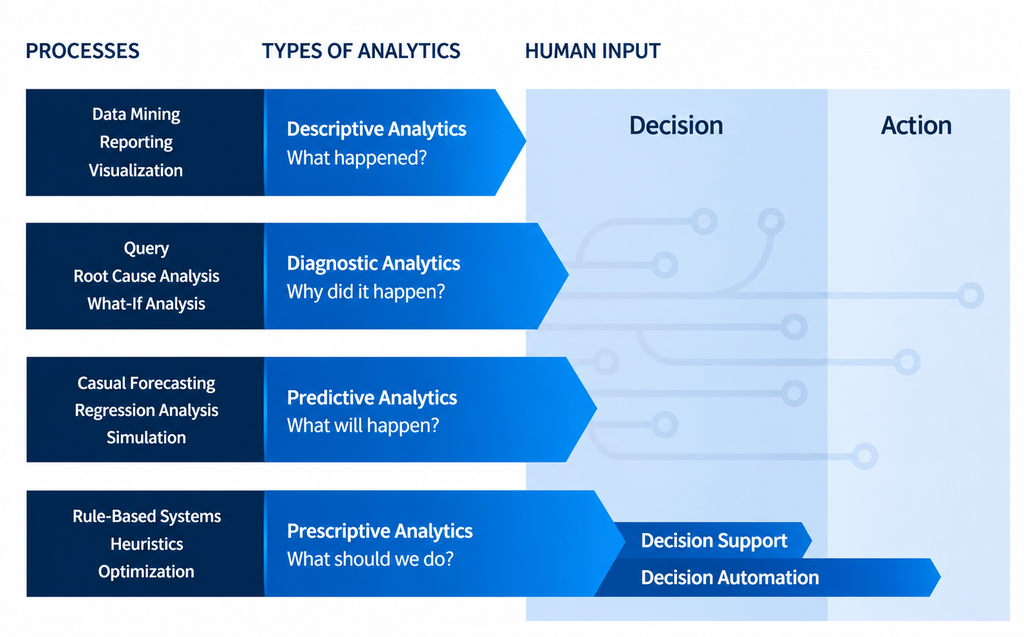
Prescriptive analytics sits on top of descriptive and predictive analytics. Descriptive analytics tells us what happened, and predictive analytics tells us what’s probably going to happen, while prescriptive analytics answers: “What should we do about it?”
At its foundation, prescriptive analytics leveraged a combination of approaches including:
- Optimization Algorithms – to determine the optimal strategy among multiple alternatives.
- Simulation Models – to test what-if scenarios.
- Machine Learning – to dynamically enhance refining decisions in response to incoming data.
- Decision Analysis Frameworks — to weigh trade-offs and evaluate risk.
They benefit from big datasets and computational sophistication that enable organizations to quickly get their hands on information in a big way. Prescriptive analytics’ output is a recommended course of action to reach a goal, whether that’s reducing cost, maximizing profit, increasing customer satisfaction, or improving efficiency.
See It to Believe It: Use Cases That Define Prescriptive Analytics
Prescriptive analytics is already widely deployed – albeit often under the covers – across industries of all sorts to help optimize processes, drive strategy, and otherwise improve outcomes. Some applications are:
- Optimization of Supply Chains
Retailers and manufacturers apply prescriptive analytics to handle inventory, choose suppliers, and find optimal logistics paths. For instance, by tracking demand and transport costs, a firm can decide when to reorder and which warehouses to source from.
- Medical Treatment Planning
Hospitals and healthcare providers apply prescriptive analytics to suggest individualized treatment plans informed by patient history, genetic information, and therapy efficacy. It can assist in resource distribution, like figuring out ideal nurse staffing or ICU bed handling.
- Designing Marketing Campaigns
Prescriptive analytics can determine which customer segments are likely to respond to specific promotions. Marketers can then customize messaging and channels for maximum impact, making sure resources are used wisely.
- Finance and Risk Management
Banks and financial institutions apply prescriptive analytics to credit risk assessment, fraud detection, and investment decisions. For example, it might suggest loan terms according to a client’s credit profile and market risk factors.
- Production and Servicing
Industrial companies use prescriptive analytics to minimize downtime with predictive maintenance. By mining sensor data, machines can notify technicians not just when something is about to break, but what should be done to prevent it.
Read More: Evolution on Business Analytics
What Are the Advantages of Prescriptive Analytics?
Prescriptive analytics is valuable because it helps organizations make informed decisions by providing recommendations based on data analysis. It goes beyond descriptive and predictive analytics, through outlining targeted strategies for accomplishing optimal outcomes. This approach enables organizations to enhance their processes, boost efficiency, and enhance customer satisfaction. By leveraging prescriptive analytics processes, companies can anticipate future scenarios and respond proactively to challenges, ultimately leading to better strategic planning and resource allocation.
Prescriptive analytics can provide a number of transformative benefits for organizations. Here are a few advantages of prescriptive analytics:
- Next-Level Decision Intelligence
Prescriptive analytics provides actionable data-driven guidance, taking much of the uncertainty out of difficult decisions. This results in quicker, more reliable, and more deliberate decisions.
- Zero-Waste Performance
Including everything from processes to resource distribution, businesses can minimize time loss, lower waste, and increase productivity with prescriptive analytics.
- Lower Your Business Expenses
From optimizing supply chains to reducing machine downtime, prescriptive analytics identifies chances to cut operational spending without sacrificing productivity.
- Pivot with Confidence
Companies armed with prescriptive analytics are more ready to respond to evolving conditions, whether they’re market swings, disruptions, or opportunities.
- Edge Over the Ordinary
Prescriptive analytics, when employed well, can be a killing blow to the competition, empowering smarter strategies and more personalized experiences.
Wrapping Up
Prescriptive analytics is the ultimate stage of data analytics, directing organizations not only in analysing history or forecasting what’s next, but in crafting it. As technologies like AI and big data advance, the power of prescriptive analytics will only intensify.
Whether you’re streamlining your operations, enhancing customer experiences, or fuelling strategic decisions, prescriptive analytics provides the tools and insights required to make the optimal choices confidently and consistently. Now is the time for organizations to move from hindsight and foresight to insight-driven action.
Explore with Uneecops How Prescriptive Analytics Can Power Your Business.