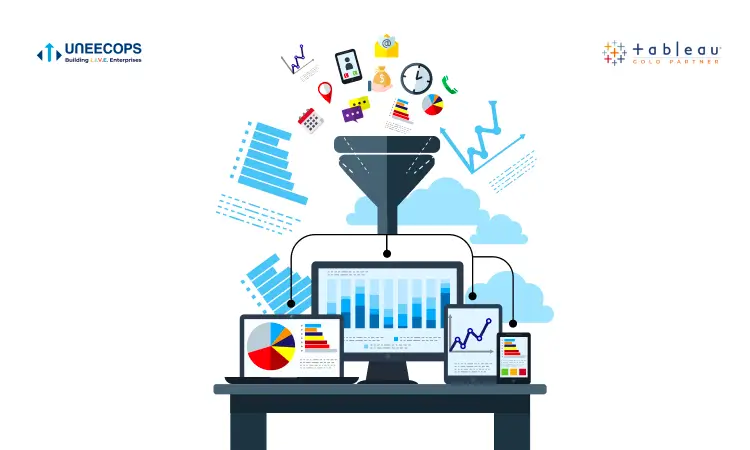


A change in analytics platform can change how your business sees and responds to opportunities. Whether it’s a Tableau Migration, Tableau Cloud Migration, or Tableau to Power BI migration, the real priority is to address existing reporting challenges, data accessibility, decision-making and build a stronger analytics foundation. A well-planned strategy will not just move your analytics, it will move your business forward.
3 Questions to Answer Before You Migrate
A successful analytics migration starts with clarity on three priorities:
- What are we trying to improve?
Set your priorities clear around improvements you expect, around reporting efficiency, cost efficiency, stronger governance, and user experience.
- What can we leave behind and no longer serves your business?
Identify the outdated, duplicated, and underutilized dashboards before migration.
- Who is driving the change?
Establish clear business ownership to ensure migration is aligned with organizational priorities.
Path 1: Making the Move to Tableau
Moving from legacy BI tools requires more than dashboard recreation. It is not just a simple lift-and-shift. Whether you are moving from Cognos, Qlik, or another platform, the right Tableau Migration approach is very important. Every transition requires a structured process and a clear understanding of modernizing data models while simplifying the analytics environment.
Start by evaluating your existing analytics estate. Identify high-value reports, retire unused dashboards, check detailed inventory, prioritize critical assets and rebuild only what supports business priorities.
Path 2: A Tableau Cloud Migration is more than a shift in hosting
Moving to Tableau Cloud shifts patching, infrastructure, and scaling responsibilities to the vendor. Focus on these 4 essentials:
- Total Cost of Ownership: Does your subscription model deliver long-term value?
- Data Security: Ensure data residency, authentication, and compliance requirements.
- Connectivity Strategy: Plan secure access to on-premises data sources to avoid migration delays.
- Governance Framework: Clearly establish access permissions and define content ownership.
Path 3: Is Moving from Tableau to Power BI Worth It?
The platform change is the easy part; the harder part is aligning people with that platform and sustaining the user adoption process. For organizations that are Microsoft-aligned, moving from Tableau to Power BI involves licensing efficiency and better ecosystem integrations. Plan your Tableau Migration as a capability shift. The trade-off is rebuild effort. How the platform is adopted, not how it is deployed, decides the return.
What separates successful migrations?
- Phase by value, not by department. Deliver one high-impact domain first. Lead with one high-impact domain, deliver it well and let the results make the case for the next phase.
- Treat parallel running as your safety net. Reconcile old and new numbers line by line, and explain every variance. When the CFO’s metrics match on both platforms, that is when the leadership should place trust.
- Make adoption a leadership priority. A platform nobody uses delivers no return. When executives uses new dashboards for reviews, team definitely follows. Usage is what turns migration spend into value.
- Measure the outcome against a baseline. Compare the post-migration usage, total cost, and decision speed with your pre-migration baseline. Share the progress regularly.
Final thought
The right BI platform should do more than support reporting. It is about building confidence in your data, simplifying ownership, streamlining processes, and faster decision-making. Considering a BI migration? Let Uneecops team of BI professionals help you evaluate your BI landscape, identify migration risks, and plan a transition aligned with your business priorities.
Uneecops helps leadership teams approach BI migration as a business decision, not just a technical task. Our BI Migration Assessment gives you:
- A clear inventory of your current dashboards, data sources and usage
- A prioritized view of what to retire, rebuild or migrate
- A risk, cost and timeline outlook for your chosen path
- A phased roadmap built around business value
Let’s map the smartest route to your next analytics platform.